
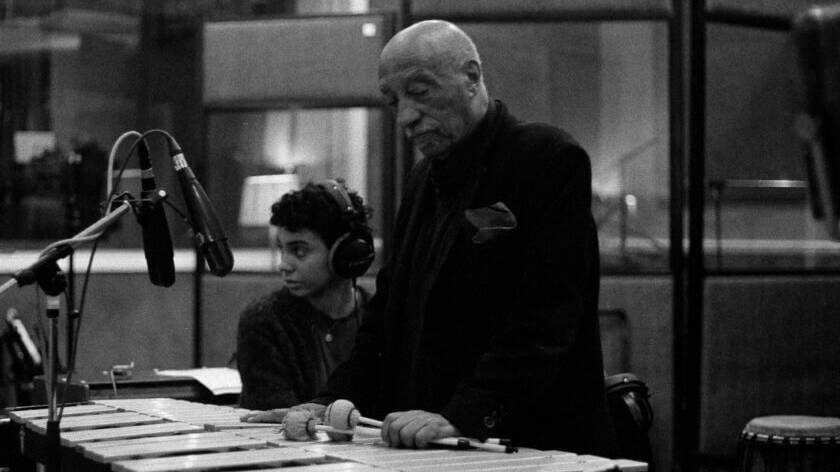
Mulatu Astatke
Widely regarded as the father of Ethio-jazz, Mulatu Astatke is one of the most influential figures in global jazz. A composer, arranger and multi-instrumentalist, his work has reshaped the musical identity of a nation while leaving an enduring mark on the international jazz landscape. By fusing traditional Ethiopian modes with jazz, Latin rhythms and funk, Astatke developed a wholly original musical language, which continues to resonate across generations and borders.
Astatke’s musical formation was inherently international. Studying at Trinity Laban (then Trinity College of Music), before continuing his education at Berklee College of Music in Boston, he absorbed a wide range of influences that would inform his later innovations. In the 1960s and 70s, he crystallised the sound of Ethio-jazz, introducing instruments such as vibraphone, congas and keyboards into Ethiopian popular music, and creating a body of work that remains foundational to the genre.
His career has been both expansive and enduring. From early recordings in New York to his transformative work in Addis Ababa during the “Swinging Addis” era, Astatke has consistently pursued new directions in sound. Collaborations with artists across continents, alongside later projects with ensembles such as The Heliocentrics and Either/Orchestra, have extended his influence far beyond Ethiopia. His music has been rediscovered and reinterpreted by successive generations, securing his place within a global musical canon.
What distinguishes Astatke’s legacy is not only its historical significance, but its continued vitality. More than five decades into his career, he remains an active and exploratory performer. As noted in The Guardian, even in recent performances he continues to push boundaries, delivering music that is “unpredictable” and rich in experimentation, demonstrating an enduring commitment to innovation rather than nostalgia.
This ongoing creative energy is reflected in his presence on major stages today. In 2026, Astatke continues to perform internationally, with appearances including London’s Meltdown Festival and We Out Here Festival, where his work sits alongside both emerging and established artists such as Harry Styles, Arthur Verocai, Kamasi Washington, and others.
Mulatu Astatke’s journey reflects a rare combination of innovation, longevity and cultural impact. His work stands as a testament to the power of musical hybridity – demonstrating how tradition and experimentation can coexist to create something entirely new. In doing so, he has not only defined a genre, but expanded the possibilities of jazz itself.

Interested in Studying Music?
Explore our courses and programmes for undergraduate, postgraduate, or research.