
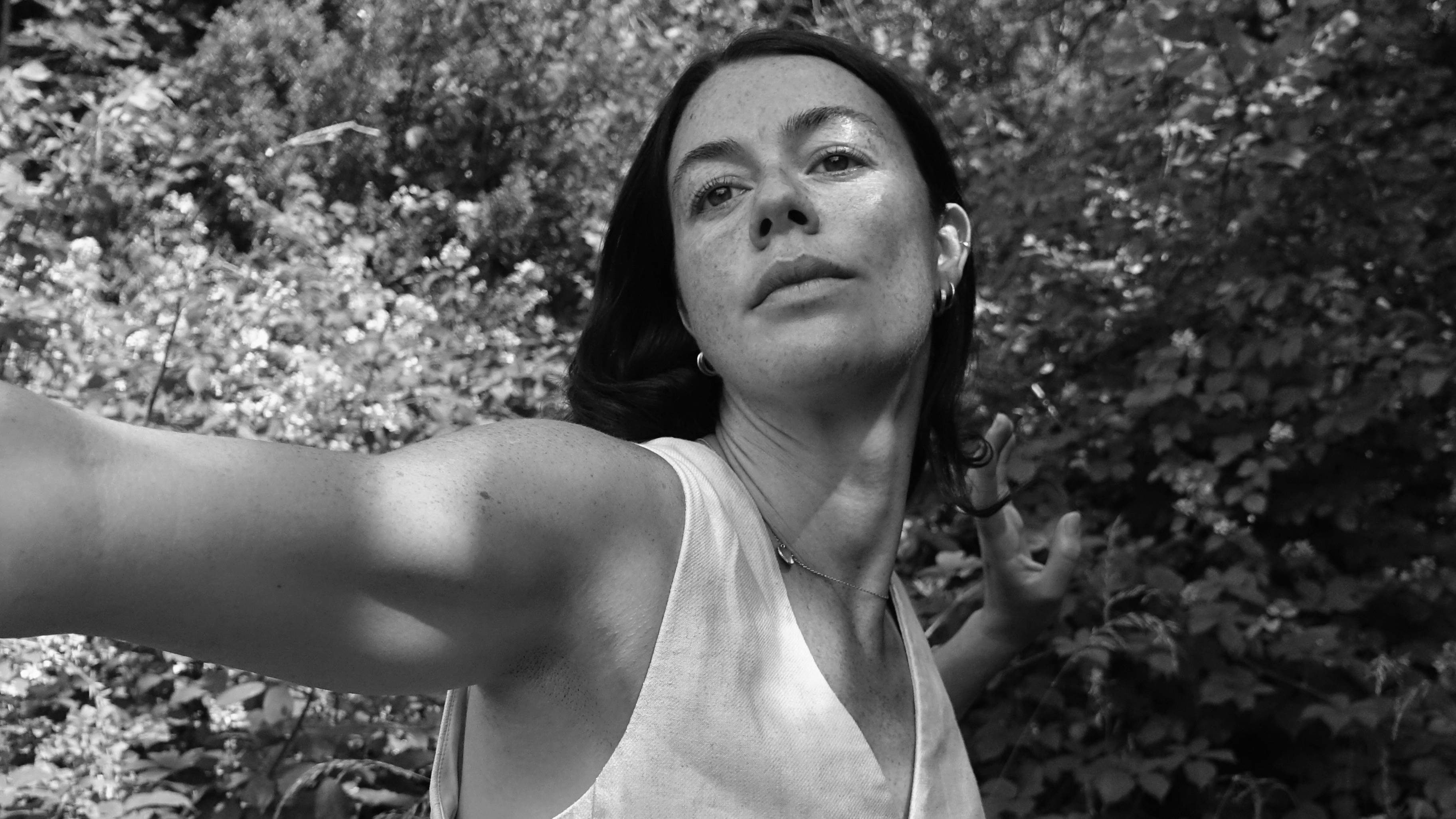
From CAT to national tours to creating sell-out shows: Chess Dillon-Reams explores how Trinity Laban influenced her career trajectory
Working as an independent artist, Chess Dillon-Reams creates socially engaged, fiercely physical dance-theatre works that draw on real experiences. With an eye for finding the political in the personal, Chess’s storytelling is driven by a desire to move audiences. Creating a space for poignancy and comedy to coexist, she aims to entertain and invite deeper reflection on our individual lived experience. After completing the CAT scheme at Trinity Laban, Chess graduated from Northern School of Contemporary Dance and toured nationally with Jasmin Vardimon’s JV2. In 2014, she co-founded multi-award winning and critically acclaimed The Hiccup Project – a distinctive dance-theatre company. She worked as Co-Artistic Director of The Hiccup Project for almost six years, co-creating and performing in three full-length works, including May-We-Go Round?, which won The Pebble Trust Brighton Fringe Award, The South East Dance Award & The Fringe Review Award for Outstanding Theatre. The Hiccup Project’s work was performed over 200 times, including multiple sell-out UK tours, and was supported by Arts Council England. Since 2020, Chess has been further developing her practice as a performer, choreographer, and teacher, establishing herself as a recognised independent artist. Her work has been acknowledged by One Dance UK, where she was nominated and shortlisted for the 2025 People’s Choice Award in recognition of her significant and profound contribution to the dance industry.
Chess’s debut intergenerational work M-Othering, also supported by Arts Council England, previewed to a sold-out audience at South East Dance in 2024, receiving glowing audience feedback and critical acclaim for premiere performances in 2025. Chess is currently Programme Lead for Dance at Varndean College, teaches adult contemporary classes at Smikle Space, and often works with and produces commissions for Smikle Youth/Junior Dance Companies. She is a Jasmin Vardimon Company associate and was commissioned to create a new work for JV2 2025, which toured nationally in Autumn 2025. We spoke to Chess about how the Centre for Advanced Training at Trinity Laban ignited her long-lasting love for contemporary dance.
What was your experience of dance before CAT?
Beyond dancing at home by myself in the kitchen, or making up routines with siblings, cousins, friends, my dance experience started at Secondary School. I attended a street dance club in year 7 and then quickly began exploring as many of the lunchtime clubs and afterschool clubs as possible, as well as Dance GCSE. I feel really lucky to have been taught by a very encouraging and passionate teacher and attended a school that really valued dance. Age 14, I started attending classes at Wendy Whatling School of Dance. There weren’t any youth companies available then in the way there are now, and I was so grateful to have a place where I could dance more and continue developing my practice, again through very passionate teaching.
What was your experience of being a CAT student?
I feel incredibly privileged and grateful for my time on the CAT scheme. I still remember walking into the Laban Building for the first time and immediately falling in love with the studios – so light and open. Every week, I had the opportunity to create, move and choreograph alongside people from all over the UK, each bringing different interests, musical tastes and experiences of dance. That diversity was hugely inspiring.
Before training with CAT, I knew I loved dance – learning material and the physicality of performing, but CAT was where my artistic voice really began to take shape. It encouraged me to challenge myself creatively, take risks and explore new ways of making work. I valued the creative freedom enormously as I started discovering my own voice as an artist.
We were always taken seriously as young artists. Rehearsals felt professional, and we were constantly learning from and collaborating with industry professionals. Being surrounded by other young people who were equally driven, passionate and committed made me feel like I was exactly where I was meant to be. Every Saturday, and during the half-term intensives, I felt part of something genuinely special.
I was always aware of what a privilege it was to have been given a place on the scheme, and I deeply appreciated the support we received for auditions and future training opportunities. Taking classes with live musicians was an incredible experience, and studying ballet through a contemporary lens helped me understand how different techniques could support my growth as a dancer.
I also loved watching my peers’ work. I was constantly inspired by the people around me and the work I was being exposed to. We were taken on regular trips to watch professional work, most notable for me was seeing Hofesh Shechter Company in 2007 – I’d never seen anything like it before and it totally opened up my understanding of what dance could be. I think it was the following year that I got to work with the company on a performance project.
The Performance Enhancement Classes (PEN) were also incredibly valuable. I remember having open and supportive conversations about topics like balancing training with menstrual cycles – things that made us feel genuinely cared for as young people as well as dancers. There was a real sense of support throughout the programme, and I thrived in an environment that combined high professional standards with such thoughtful care.
What has the CAT scheme taught you?
Through CAT I was taught in a way that built confidence and allowed me to learn to value my own work and creative ideas. I learned that intensity and care with dancers can coexist. Developing that kind of work ethic has proved crucial within the industry. It taught me to actively seek out experiences where I was dancing alongside people who were different from me in terms of age, background and perspective, and it encouraged me to experiment more and be playful in what I was creating.
I learned a huge amount about technique, choreography and the importance of useful, constructive feedback. The scheme also introduced me to conservatoire training and gave me an understanding of what higher-level dance training could look and feel like. By the time I arrived at Northern School of Contemporary Dance, I had a good understanding of the etiquette of working with live musicians, of the current established and emerging artists and I knew what it felt like to really push myself physically and creatively. Most importantly, CAT helped me realise with certainty that dance was the path I wanted to dedicate myself to.
Now, as a teacher working with the next generation of dance artists and as a choreographer facilitating dance spaces in a range of contexts, I hold strong values around encouraging professionalism and a strong work ethic, while also providing nurturing support with a real emphasis on individuality and truly seeing people as individuals. I feel very fortunate to have experienced similar values during my time on CAT. I always felt that our differences, both as dancers and in the ways we learned and developed, were respected. I felt seen as an individual and encouraged to explore and grow as an artist in my own way.
The support I received from CAT has driven me to now provide similar opportunities for the next generation of dancers. The course I lead at Varndean College is free and therefore accessible to a wide range of young people, while still promoting the same level of professionalism, and supports students in successfully auditioning for conservatoires. Inspired by the audition toolkit experiences I had, I run an enrichment programme specifically designed for young people aspiring to pursue a career in dance.
What are your future aspirations?
To continue making dance work which moves, entertains, and inspires. To continue working to share my practice with all ages; inspiring new generations of dancers and supporting the growth of a holistic and inclusive industry.
What advice would you give someone applying to CAT?
Go for it. Be yourself and give it everything. I received the full grant for my CAT training: without it, I would not have been able to participate. This grant essentially paved the way to my entire dance career to date. I am forever grateful for CAT; the teachers, the resources, and the overall experience.