
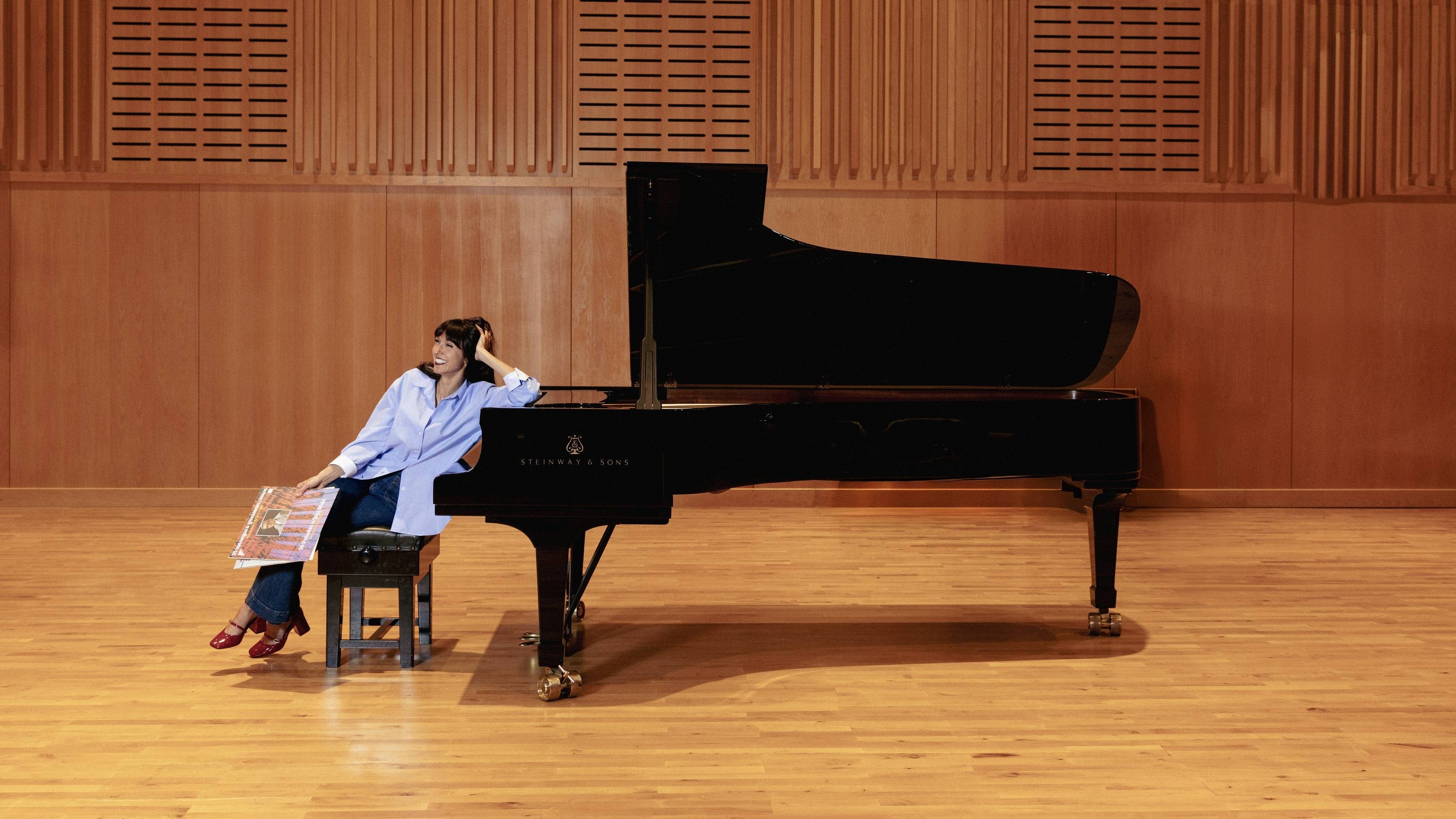
Ophelia Gordon on fusing musical genres and her acclaimed album Kapustin: Between the Lines
“Ophelia Gordon really knows how to make Kapustin’s melodic lines and rhythms swing, but is equally sensitive to the reflective sultry sides of his musical expression,” writes critic Erik Levi in BBC Music Magazine about master’s student Ophelia Gorden’s debut album Kapustin: Between the Lines. A fearless advocate for contemporary fusion, Ophelia has recorded a monumental 20-track record on Divine Art Records which has entered the UK Official Charts. Praised for its virtuosity and vitality in several press outlets – including Prospect Magazine and Gramophone – the album showcases Ophelia’s commanding technique and new perspective to the intersection of jazz and classical music. She is set to perform Kapustin at Ronnie Scott’s on Monday 17 August as part of their groundbreaking classical series and at Cadogan Hall on 1 July.
The first classical alum of the BRIT School, Ophelia is a versatile musician who initially specialised in classical guitar and double bass at Durham University and City University London. Her career spans teaching, performing, and collaborative piano. She won first place at the ARS Nova International Competition in 2021, and served as the Resident Pianist for the Art Song Preservation Society at the Manhattan School of Music in New York in 2024.
Her relationship with Kapustin’s music is deeply personal. Discovering his music at a time of profound personal upheaval, Ophelia found in its precision, rhythm, and architecture a form of grounding and survival. She is committed to fostering conversations that extend beyond the stage, advocating for mental well-being and the role of artistic passion in rebuilding one’s life. Rather than approaching Kapustin as virtuosic display, Ophelia treats the music as a lived language – one that demands clarity, courage, and emotional truth. Her performances and recordings reflect an artist shaped as much by resilience as by refinement, committed to work that speaks honestly and without compromise. Ophelia currently studies under our Head of Keyboard, Ji Liu, and with renowned jazz pianist Liam Noble, having been awarded the Trinity College London Scholarship and the Cutlers’ Scholarship.
We spoke to Ophelia about Kapustin’s boundary-breaking compositions and the importance of staying true to yourself when performing.
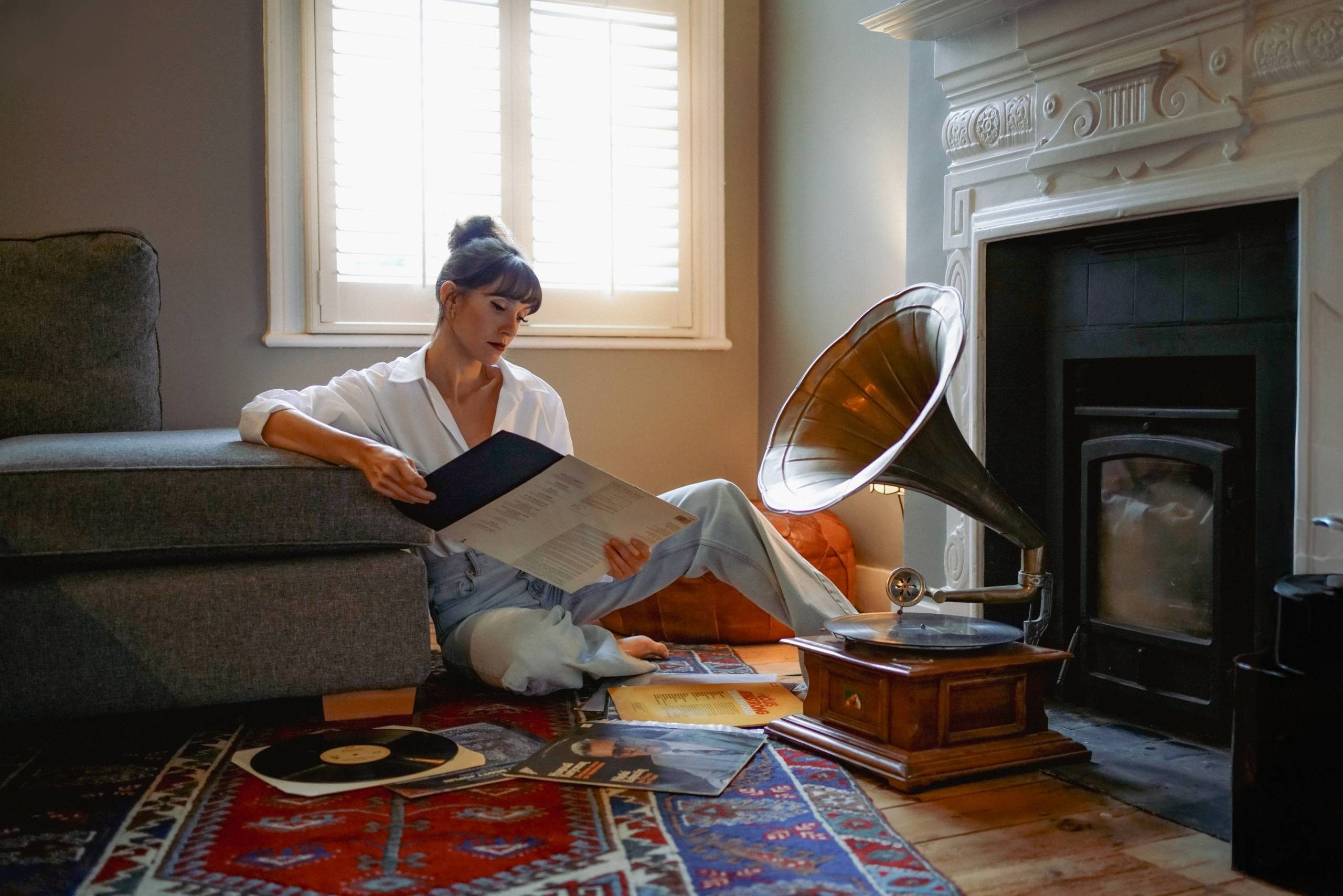
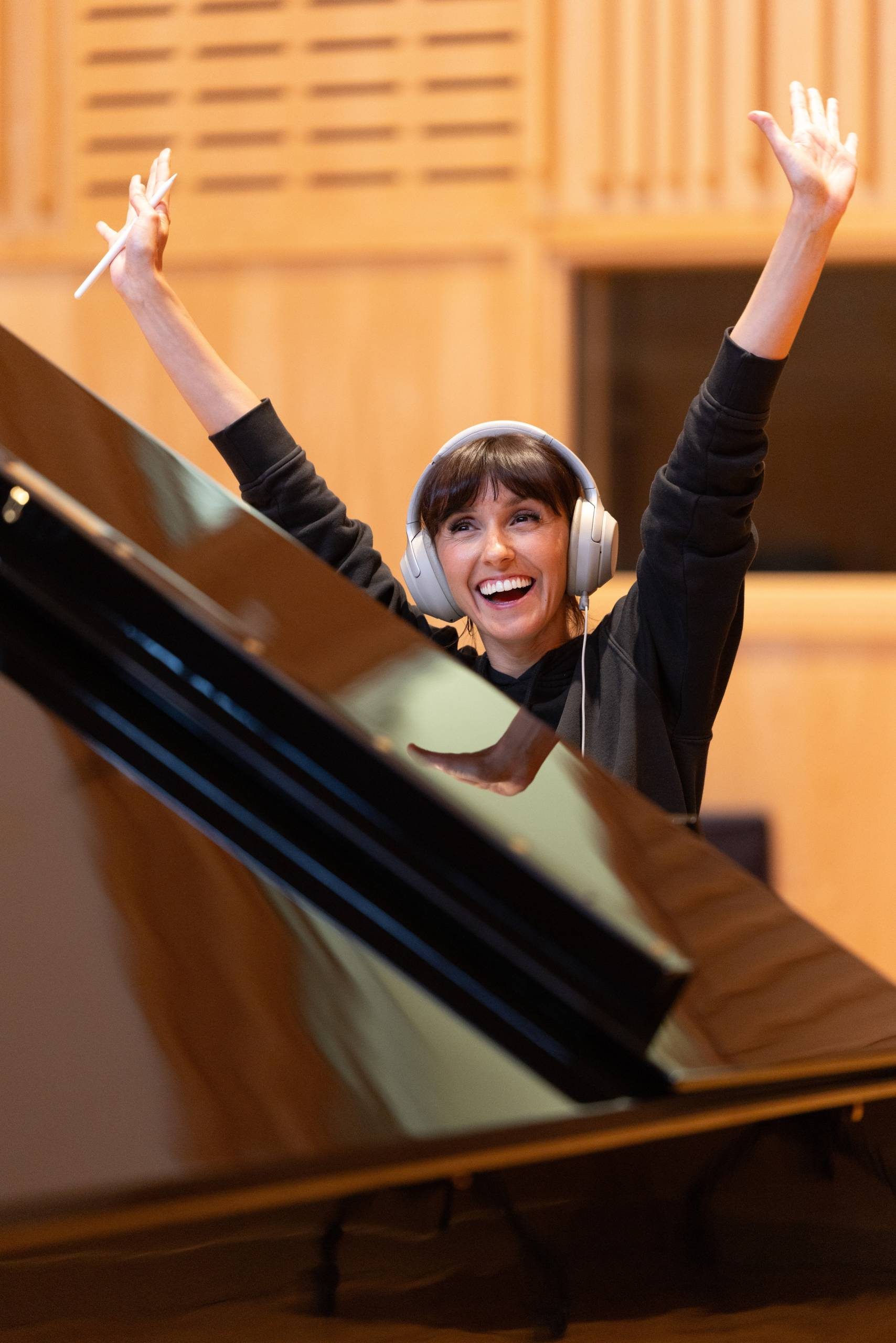
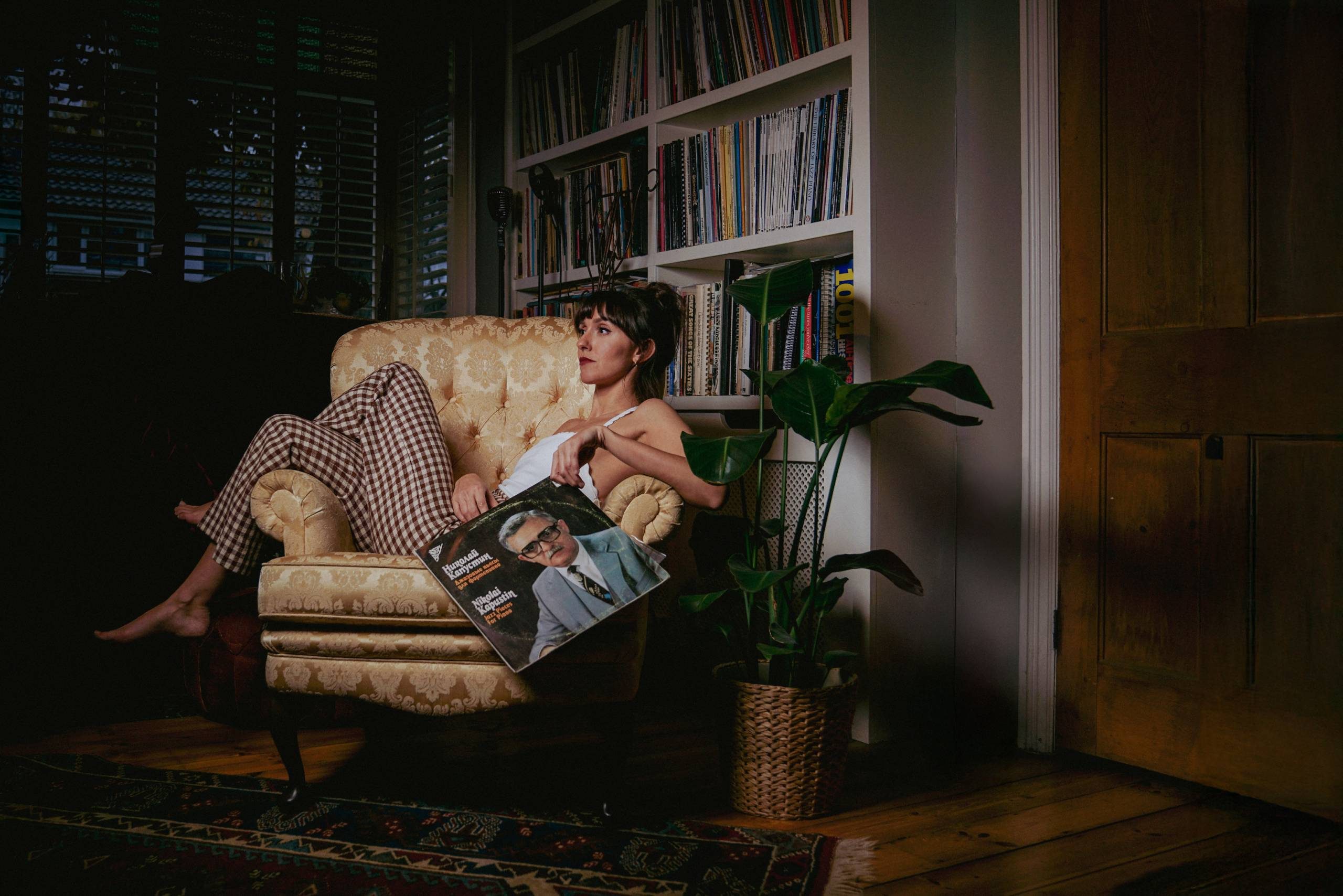
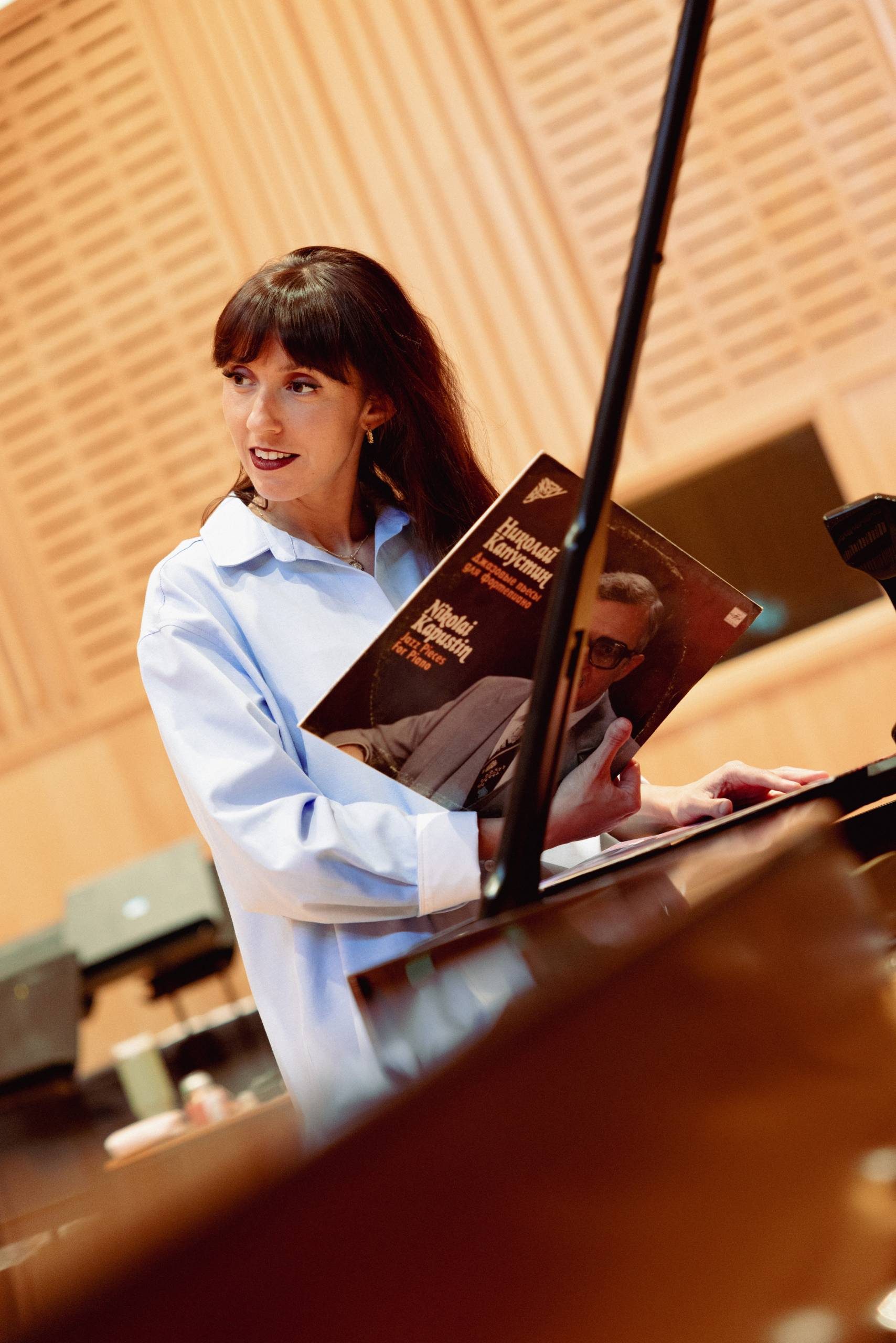

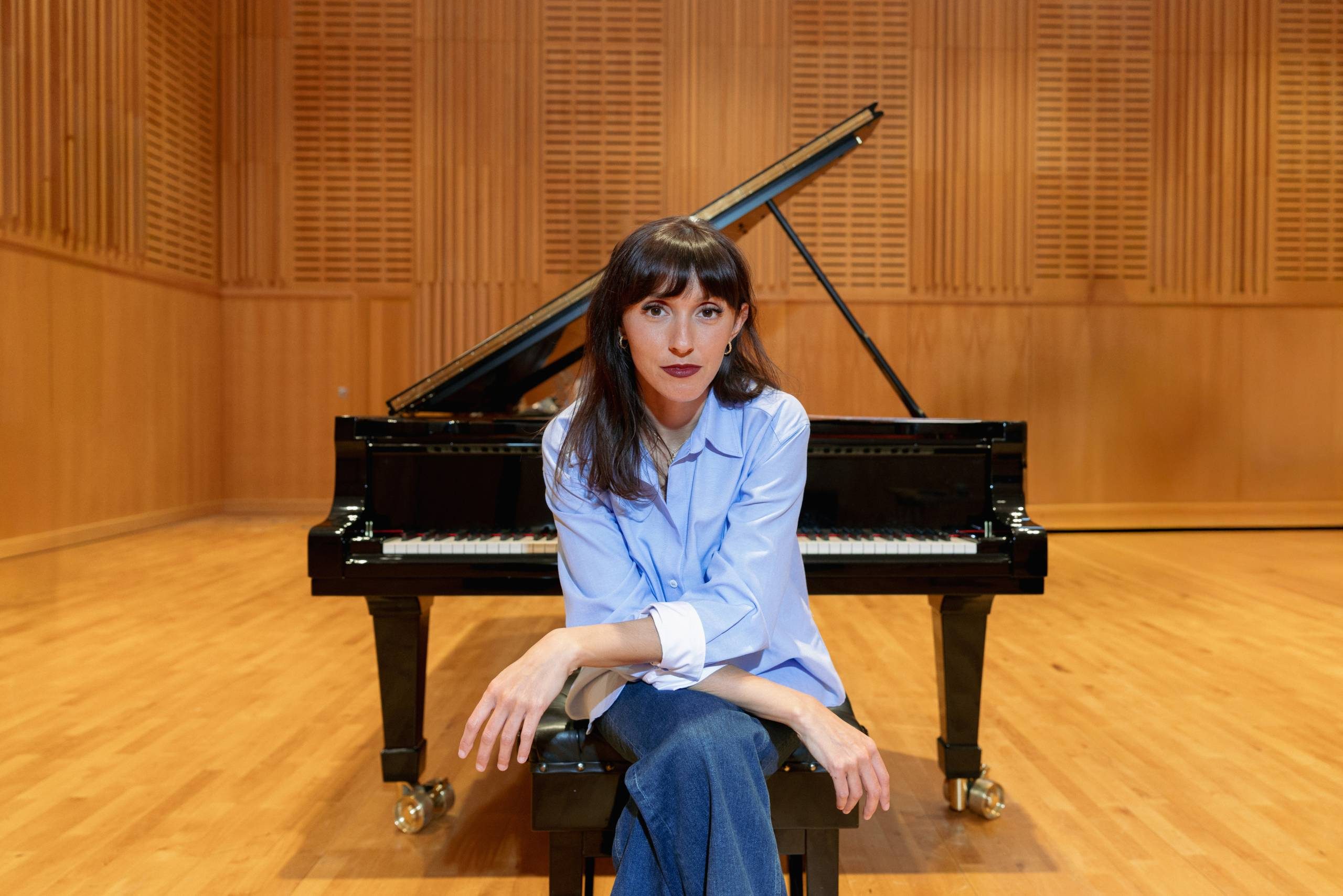
Tell us about your debut album Kapustin: Between the Lines. Why did you choose to record the music of this composer?
I grew up listening to jazz and classical music, and Kapustin’s compositions are a fusion of these two genres. I first heard his work on BBC Radio 3 in 2022, and was completely captivated by it. After purchasing the sheet music, I realised just how difficult it was. But this style of notated jazz was exactly what I was looking for – I’m classically trained and never learnt to improvise and read chords in the jazz tradition. I learnt a few of Kapustin’s pieces and then played them at Chetham’s International Piano Summer School, which I attend every year. You can do a private recording there, and during my session, the engineer offered me the contract to do an album because he thought the music was amazing. At the time, I never thought I would do an album, I had no idea what it would look like.
Relatively few people know about Kapustin and I wanted to choose the pieces that were most accessible for a new listener, as his music can be quite contemporary and heavy. I chose eight of my favourite preludes and recorded eight concert etudes. I then selected some of his solo pieces and recorded a two-piano piece by myself, learning both parts and then layering one part on top which was very challenging. I wanted to create an album that you could listen to from beginning to end and it took you through all the styles of Kapustin in a nice, accessible journey. I’m currently working on a second album, which will explore the composer’s repertoire for big band and piano.
How did it feel to perform the album live at Bechstein Hall?
It was amazing. I had performed compositions from the album before in other concerts, but this was unusual because it was an album launch, so I was hosting the event as well as playing in a concert. I had to make sure that I provided enough context for the audience, so they understood what the album was all about. To jazz musicians, Kapustin is a grey area – they might have heard of him, but don’t necessarily classify him as jazz so it was important for me to invite the jazz community to listen. The problem I have is that classical audience perceive Kapustin’s music as too jazz-oriented, whereas jazz musicians don’t view him as part of the jazz world. I think this is important to challenge. His music doesn’t have to belong to either genre, but it definitely belongs to both, and we need to champion this blend and open up the debate of what a genre even is. Why are we still defining genres in certain ways? It’s important to modernise our thinking and not make assumptions on music before you’ve given it a chance. I stood in the concert and told people to clap whenever they want to – if the essence here is jazz, then why not?
What initially drew you to classical piano?
Several members of my family are professional musicians, so music has always been a huge part of my life. I’ve been playing the piano for as long as I can remember – I’ve never known anything different. However, I did do my undergraduate studies in classical guitar and double bass, although piano was always my first instrument. When I finished university, all my work fell back into piano – I was accompanying and teaching. That’s why I’m doing a master’s in piano now, as I didn’t have those undergraduate years with the instrument. The piano feels like an extension of myself. I look at it and I don’t even know why I enjoy it, it’s just a part of me now and I can’t imagine my life without it. I struggled a bit when I was studying because I was young and it’s hard to find your way – I always wanted to go to conservatoire but I didn’t initially get in for guitar. I’m absolutely over the moon to be here now, even though I’ve taken a slightly different route and come at it with more life experience.
You’re currently studying on the MMus course at Trinity Laban. How has this helped your professional career?
It’s really helped because Trinity Laban gives you space to find out who you are. Ji Liu, the Head of Keyboard, is my main teacher and lets me explore everything myself. If I come up with an idea, he encourages me to go for it. So many of the modules have this underlying narrative of identity and authenticity, and I think that’s the real strength of Trinity Laban. The more I am myself, the more I have a chance of actually succeeding without fear. Trinity Laban helps me to explore this, and no one shames me for it. When I performed Kapustin to professor Martino Tirimo – an internationally renowned and prestigious classical pianist – he said he could see how much his music meant to me and how much I loved it. Although it’s not the type of music he gravitates to, he chose to celebrate it – that’s wonderful.
Trinity Laban is a very safe musical space. Although I was never really academic, I’m really enjoying studying and going to the library. This introspective journey of focusing on my craft and knowing that everyone else is doing the same thing is really helpful. The atmosphere isn’t competitive, but super supportive and everyone is just curious. I’ve loved some of the cross-departmental projects I’ve done, including working on arrangements of Kapustin with women from the Jazz Department and working with singers.
Do you have any advice for aspiring pianists?
If you’ve got a certain goal, you’ve got to stay really disciplined. You have to work really hard to record an album and you’ve also got to put blinkers on. What I’ve found is that I had to mute all these other thoughts because I kept getting distracted by what my album cover should look like, how I should be marketing it, how I should be performing the music. It’s overwhelming and I started questioning myself. There isn’t a right way, but there’s your way and other people’s way. In preparation for the recording, I was practising all day and I had to trust that my idea was strong enough. These distracting worries clouded my ideas. You have to able to filter so much out.
We all experience a life crisis at some point. Use music as your anchor and channel your emotions through it. Know that music is a safe space and it can help you process what is happening, it can allow you to share your experience in the most honest way. I’m still on that journey, but it’s getting better every day. I’ve been in therapy for two years and musicians shouldn’t be scared to go – as I’m doing it, I’m learning about myself and people have told me my playing is so authentic. Pianists often aspire to be like other great pianists and want to play the same repertoire as everybody else. The reviewer from Gramophone compared my recording to two of Kapustin’s key recordings but I’m pleased that mine sounds different because the comparison defeats the point of being authentic. I played Kapustin’s work not because I thought I would ever record an album, but because I genuinely enjoyed playing it. I would still play his music even if nobody heard me. I honestly didn’t think an album was within my reach, so the fact that it happened so organically is crazy.