The world’s leading Hang player: meet Grammy-nominated global sensation Manu Delago
Described as “a legend in the making” (The Ransom Note) and “a masterful and sensitive musician” (The Telegraph), Manu Delago is currently touring his latest album with Max Zt, Deuce. Rooted in rhythm, rich in texture, and open in spirit, the duo invite listeners into a world that feels both ancient and somehow entirely new. In tennis, 40/40 is called “deuce”, the moment when the score is tied and the game hinges on back-and-forth exchange. This idea is central to their project: the transfer of energy, attention, and responsibility between two players. Specialising in handpan, drums, and composition, Manu has toured and made music with the likes of Björk and Anoushka Shankar, earning Grammy nominations for the albums Between Us… and Land of Gold. “What a non-stop affair of creativity, surprise, beauty, harmony, wit, art, invention, energy, entertainment” said author and journalist Amanda Yensa Manor – and we can’t help but agree. Trinity Laban spoke to Manu about his musical journey as a percussionist and the way he incorporates the natural landscape into his work.
How did your musical journey begin?
As a two-year-old, I began what would become a very musically inclined life as I sat behind my first drum kit. I played for various bands as a young teenager and my rock band HotchPotch won the Austrian Band Content, touring across Austria, Germany, Italy, and Spain. When I began playing the Handpan in 2003, I discovered my passion for writing music. I graduated from the university Mozarteum in Innsbruck in classical percussion, in jazz drums at Guildhall School of Music and Drama, and then in composition at Trinity College of Music (now Trinity Laban).
Tell us about how your career as a percussionist has evolved.
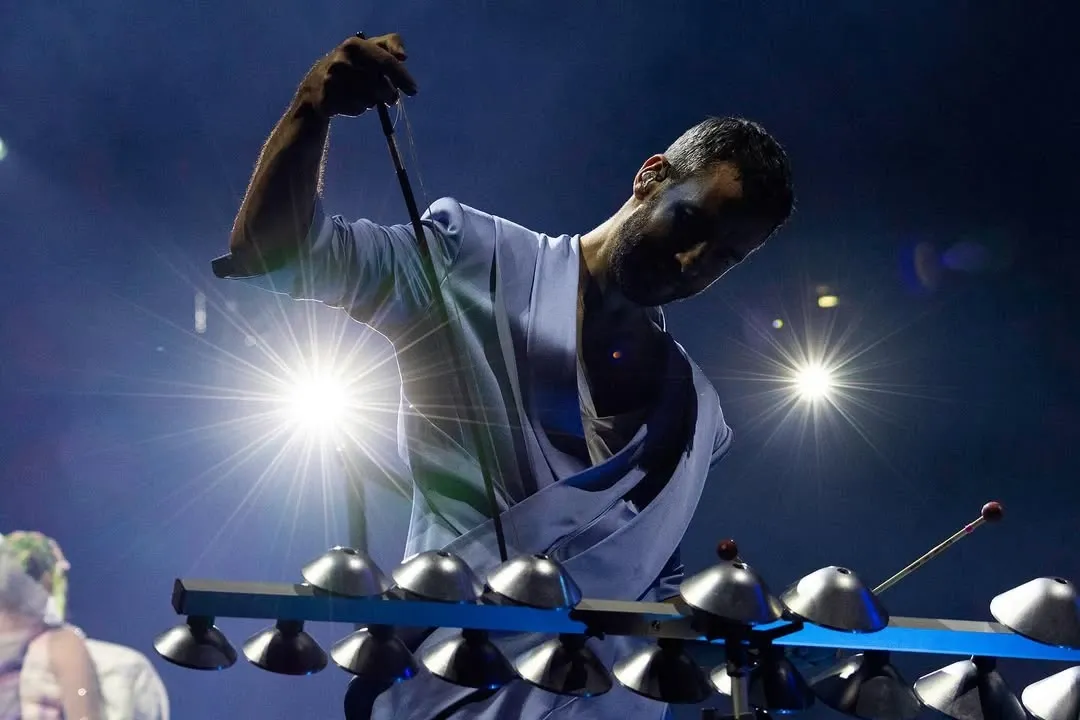
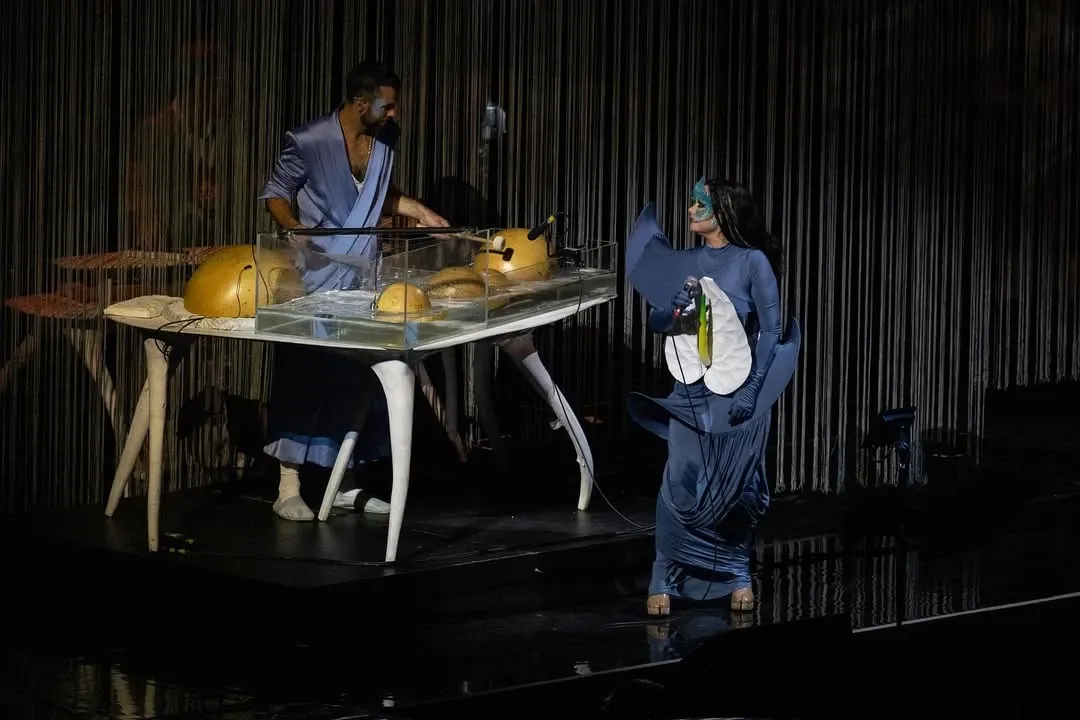
In 2007, my solo piece Mono Desire was the most popular Handpan video on the internet, with over five million views and charted in the Top 30 music videos on YouTube. Since then, I’ve had the opportunity to collaborate with various genre-leading artists. I appeared as a guest on two albums of the Psy-Trance producers Shpongle and performed with them on different occasions. In 2011, I recorded for Björk’s Biophilia album and have since been her touring drummer, playing in four world tours. Two years later, I started performing and writing music with sitar-player Anoushka Shankar – I earned my first Grammy nomination for my work on her album Land of Gold and my second for the album Between us. I’ve also been a touring member of The Cinematic Orchestra and Olafur Arnalds, while performing and recording with amazing orchestras like the LSO. These opportunities have taken me to stunning venues across six continents, from the Royal Albert Hall in London to Carnegie Hall in New York and the Sydney Opera House.
The environment plays an integral role in your music. How have you chosen to spotlight it?
On the album Metromonk (2017, Tru Thoughts Records), I focused on electronic sound manipulation of the Handpan. The video Freeze was filmed in the Alps and premiered by Red Bull Music. That outdoor adventure triggered the idea to a bigger and more audacious project – Parasol Peak – a multi-award winning album and film in which I led an ensemble of seven musicians on a mountaineering expedition in the Alps (2018, One Little Independent Records). My love for the environment has been a big part of my artistic vision ever since.
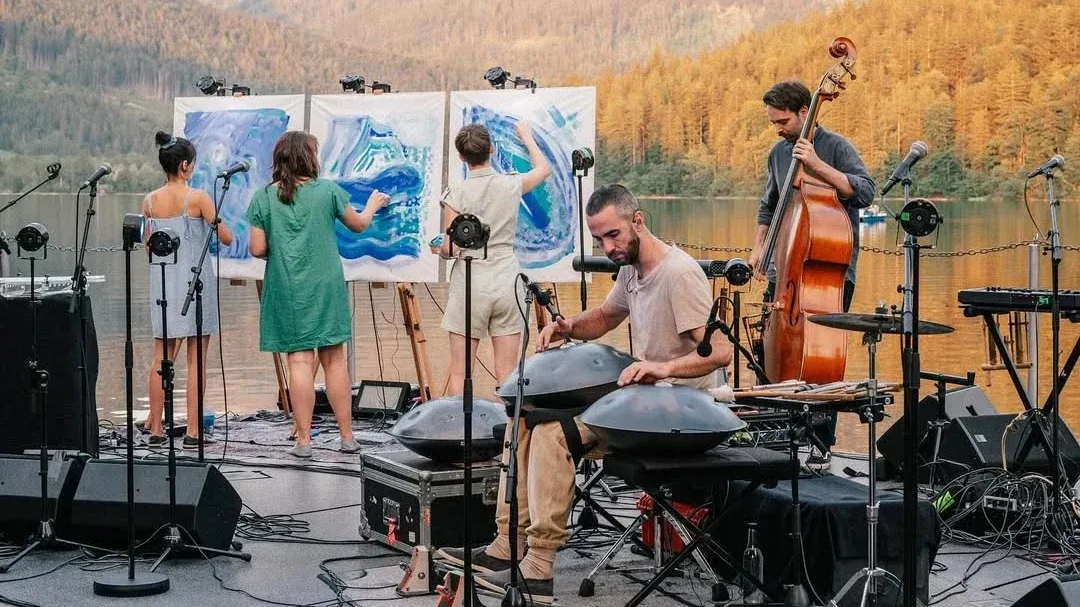
In 2021, I launched the ReCycling Tour, a sustainable concert tour by bicycle, on which my band and crew carried all the equipment in bike trailers. The first edition led us 1500 kilometers through the Alps, performing 18 concerts around Austria, Germany, and Italy. In 2023, we embarked on another ReCycling Tour from my hometown Innsbruck to Amsterdam, which was followed by the release of the documentary film From the Alps to the North Sea. My audiovisual solo album Environ Me (2021, One Little Independent Records) was constructed using my percussion playing, electronic manipulation, and sounds recorded directly from an array of natural sources.
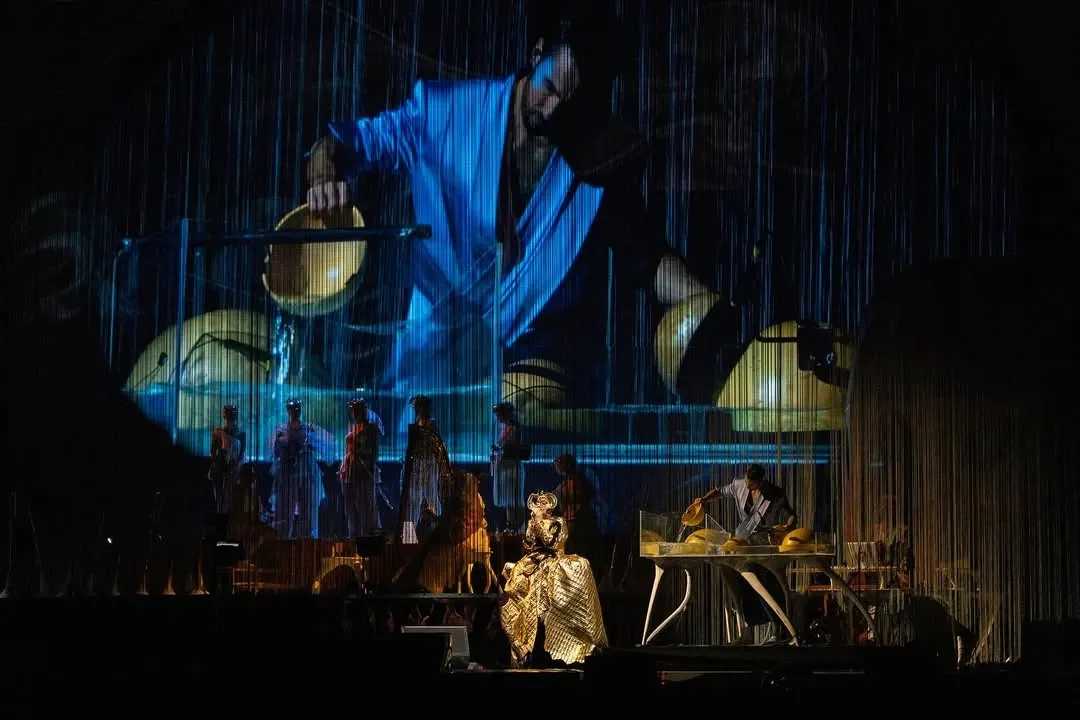
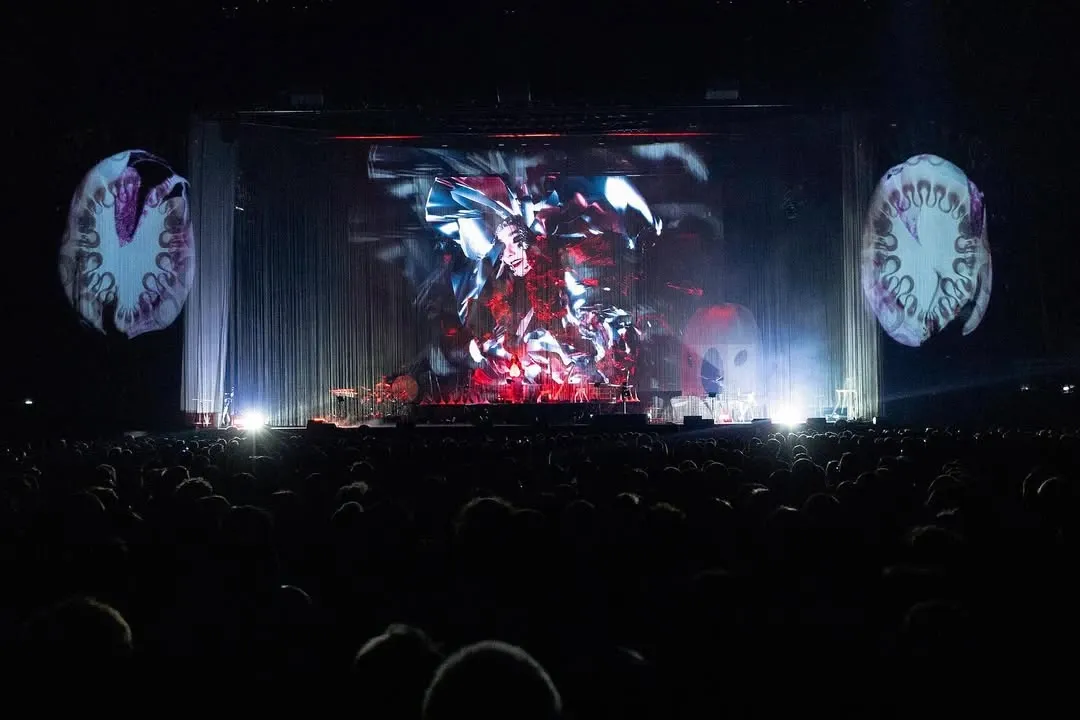
Björk tour in Prague, image credits: @santiagraphy
What was your favourite thing about Trinity Laban?
I really liked the composition department which was very well led by Dominic Murcott. There were a lot of creative people around, both, students and teachers. But the composition department also felt very open and connected to any other department. As composition student I had the opportunity to work with many different instrumentalists and instruments from which I learnt a lot.
What advice would you give prospective students?
Sleep enough. Eat well. Be on time.
Be kind to other people. Be experimental. Be open minded.
Main image credit: wellenklænge // @juliageiter