
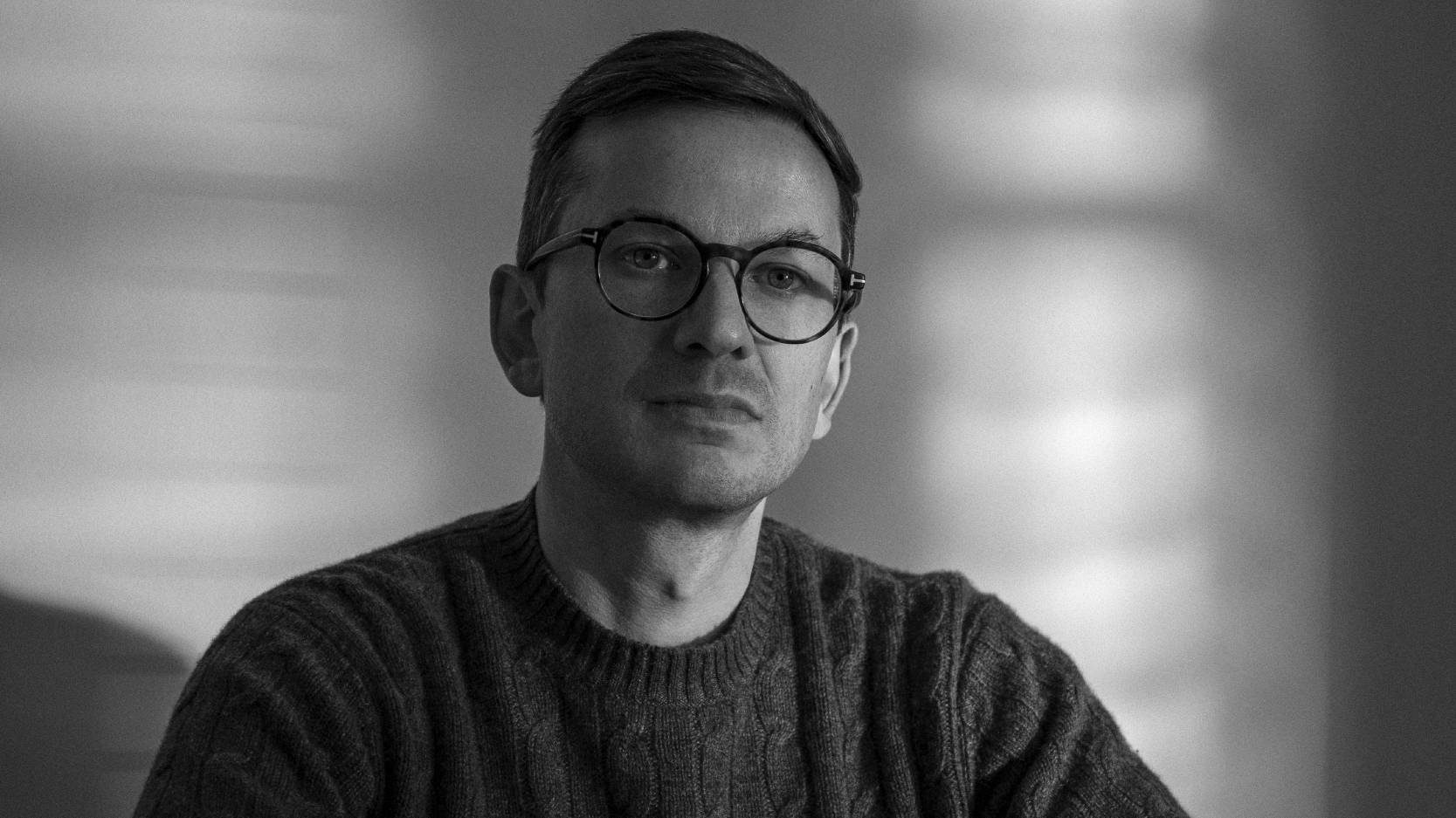
Will Dutta on creativity, community, and shaping the future of independent music
Dr Will Dutta began his doctoral research at Trinity Laban in 2013. As he publishes a new paper in The Curating Composer series he reflects on the impact of his time at Trinity Laban: “I was trying to understand a creative workflow that was not only very personal but one that I felt had the potential to revitalise our institutions. As my thinking progressed under the guidance and encouragement of my supervisors, Professor Dominic Murcott and Emeritus Professor Dan Fern (Royal College of Art), wider themes of artistic leadership, collaboration, community, entrepreneurship and the changing realities facing independent creators surfaced. Those ideas became The Curating Composer.”
Since completeing his PhD, Will has risen through the ranks of the music world. In 2023 he was appointed Chief Executive at Sound and Music, the UKs accelerator for new music and sound. His work remained grounded in research: “What began as academic questioning has gradually become part of how we at Sound and Music think about supporting artists, developing programmes, undertaking research, convening the sector and advocating for a future where independent creators and original work can thrive and shape the creative conversation and our nation’s culture.”
Earlier this month Sound and Music published the third paper of The Curating Composer series, Creative Waste and Dimensioning. The paper is the continuation of the ideas that Will began to consider at Trinity Laban. Since then, his thinking has continued to evolve and grow through conversations with artists, colleagues, researchers and partners across the UK.
Will explains the three different Curating Composer papers which have been published so far: “The first Curating Composer paper set out a new role with a distinct set of practices and captured some of the do-it-yourself energy that goes with it. The second took this further and explored how artist-led communities and DIY music scenes emerge and what they need to flourish. The third asks another question: what happens to everything that gets left behind? Not the premiere. Not the review. Not even the short tour that follows – if you are lucky. But the research, experiments, sketches, discoveries, conversations, and even finished works itself, that creators generate before a work reaches an audience.”
I realise the biggest lesson I have taken since my time at Trinity Laban is that research is most valuable when it does not remain within academia
Dutta’s thinking is rooted in his experience at Sound and Music and his interactions with artists and researchers. He explains: “Across our programmes at Sound and Music we repeatedly hear the same story. Creators invest extraordinary amounts of time, imagination and expertise into developing ambitious work, yet so much of that creative value disappears from view once a project is complete. Our systems reward movement towards the next new thing. They rarely reward returning.”
The paper relies on two key concepts. The first is ‘Creative Waste’, described by Will as “valuable artistic potential that remains unrealised – not because it lacks quality, but because the structures surrounding creativity encourage continual novelty”. The second ‘Dimensioning’ refers to “the idea that artistic work can continue evolving across new forms, collaborations, technologies, audiences and contexts.”
The paper was launched in July 2026 at an immersive symposium in partnership with Sheffield Hallam University. The concepts within the paper were immediately picked up by the attending artists, researchers, commissioners, funders, venues, festivals, and universities. Will spoke to the experience of seeing this in action: “One of the most insightful observations came when a partner reflected, ‘We need to redefine what a successful artistic career looks like.’ While another asked, ‘What is the audiovisual equivalent of the pub back room?’ Those moments reminded me that the publication was already doing exactly what I had hoped. It was not presenting finished answers; it was creating shared language and inviting others to reshape it.” The research continues to engage across the sector “The research has become an ongoing conversation with the sector rather than a series of publications.

Throughout the process of researching and writing, Will’s time at Trinity Laban remains central to his research: “Reflecting on this journey, I realise the biggest lesson I have taken since my time at Trinity Laban is that research is most valuable when it does not remain within academia. It should continue evolving through practice. It should shape organisations, bring people together, and influence how sectors think. And it should improve the conditions in which creativity happens. At Sound and Music, that belief has become central to our mission. Our research is no longer something we publish alongside our programmes. It increasingly informs how we design them, how we convene, how we advocate and how we imagine the future of the industry.”
For Will, The Curating Composer series is not the end but the beginning. The beginning of new conversations in the sector, new research, and new ideas. Will concludes with a resounding call to action “As part of the Trinity Laban community, I would love you to join that conversation too. Read the latest paper or read about the symposium. Then tell us what resonates with your own practice, research, or teaching. Because ultimately, The Curating Composer was never only about understanding a personal creative workflow. It has become about helping shape the conditions in which future generations of independent creators – including Trinity Laban graduates – can imagine boldly, take artistic risks and build sustainable creative lives.”
Read Sound and Music’s The Curating Composer: Creative Waste and Dimensioning here.
You can get in touch and share your thoughts on The Curating Composer at Research@SoundAndMusic.org