
BA (Hons) in Music Top-Up
Course details
The BA (Hons) Music Top-Up is an intensive one-year programme for musicians ready to deepen their artistic identity and expand their creative practice within a dynamic London conservatoire environment. Building on your prior study and experience, the programme supports you in refining your distinctive musical voice while developing the breadth of skills required of today’s professional musicians.
By the end of the programme, you will be able to create music as an instrumentalist, vocalist, composer or a composer-performer at a level appropriate to entry to the profession and/or undertake Masters level study. You will have established a secure artistic personality and developed a range of sophisticated professional skills. You will have gained understanding of the music profession and its audiences in contemporary society. Through your understanding of audience you will develop collaborative, digital and entrepreneurial skills in support of a professional career.
The programme prepares you for careers in music education; community and participatory practice as a workshop leader or animateur; arranging and collaborative projects; and specialist areas such as production, musical theatre, popular music or musicology.
This course is new for 2026 and is subject to validation.
Key Facts
- Awarding Institution
- Trinity Laban Conservatoire
- Location of Study
- King Charles Court
- Duration
- 1 year (full time)
- UK Credits
- 120
- ECTS
- 60
Key Dates
-
Open Day
Find out more -
Welcome Week
See institutional term dates
Detailed Information
Learning and teaching methods
Learning and teaching methods will include seminar sessions, tutorials, practical sessions, workshops at schools and other settings, student-led collaborative activity, practical activity in the keyboard lab, online learning through Auralia and other software programmes.
Assessment
Assessment strategies and methods on the programme will include: portfolio submissions to support flexibility, rationales to evidence understanding and explicate reasoning, practical assessments and workshops, compositions and audio-visual artefacts, technical exercises. The Research Project module allows for students to choose an submission format in consultation with their tutor and the module leader.
What do I have to do to pass?
In order to pass the programme you must achieve the credit for each module. You must pass each module with an overall mark of 40 (except where compensation applies). There may also be a requirement for you to achieve a minimum mark in each assessment. Where this is the case it will be stated in the module specification.
Certain modules may be compensated at the discretion of the assessment board. Compensation is the award of credit for a failed module on the basis of good performance in other modules. Rules applying to compensation can be found in the Academic Regulations for Taught Programmes.
Modules
Instrumental & Vocal Teaching
This module develops your skills as an instrumental or vocal teacher, preparing you to work confidently with learners from beginner to advanced level. You will explore a range of pedagogical approaches, educational theories and inclusive teaching strategies, alongside practical and psychological aspects of learning, practice and performance. Through reflection and applied teaching experience, you will deepen your understanding of both your own musicianship and the learning process.
Creative Leadership
Creative Leadership focuses on leading and facilitating music in educational and community settings. You will develop skills in group composition, improvisation and workshop design, exploring the social and artistic impact of collaborative music-making. The module supports reflective practice and prepares you for leadership roles in schools, arts organisations and participatory contexts.
Digital Musicianship
This module introduces the creative and technical skills required to work with music technology. You will develop practical experience using Digital Audio Workstations (DAWs), sampling, synthesis and sound editing to create studio-based work and music for live performance with electronics. Alongside practical work, you will engage critically with key electronic works and aesthetic approaches to digital music-making.
Composing for Media
Composing for Media develops your skills in writing music for film and screen. Through a series of short assignments and a larger final project, you will explore the creative and technical demands of media composition. You will produce a complete soundtrack for a film extract, integrating instrumental, electronic and Foley elements, and develop an understanding of how music shapes narrative and atmosphere.
CoLab
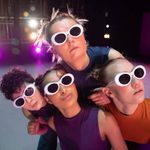
CoLab (Collaboration + Laboratory) is an intensive collaborative project that brings together students from across the institution to create new work. Working with musicians, dancers and artists from other disciplines, you will experiment, take creative risks and engage in process-led artistic exploration. The focus is on collaboration, reflection and documentation, with some projects culminating in informal sharings or performances.
Arranging
This module strengthens your understanding of advanced theoretical concepts through practical arranging. You will apply and extend your harmonic and stylistic knowledge across a diverse range of repertoire, developing the ability to adapt music for different instruments, voices and contexts. Reflection and peer review form an important part of the creative process.
Research Project
The Research Project enables you to undertake an independent investigation into an area of musical interest related to your practice. You will develop research, critical thinking and analytical skills, culminating in a substantial written or practice-based project that demonstrates your ability to engage deeply with a chosen topic.
Entry Requirements
Students at KM Music Conservatory will need to achieve a minimum of High Pass or above for their Diploma of Higher Education (DipHE) Music overall in order to be eligible for this programme. Applications will open in March 2026 and will be processed directly by Trinity Laban, not through UCAS.
English Language Requirements
IELTS (General or Academic Training) minimum 5.5 in all four areas or Trinity College London – Intergrated Skills in English level II or above. For more information, visit our English language requirements page.
If you require a student visa to study in the UK, you may require a Secure English Language Test (SELT).